why nothing feels finished anymore
On permanent beta, endless progress, infinite growth, and the systems that resist completion.

There is a strange, quiet sensation many people share today, even if they don’t always name it clearly.
Projects don’t feel finished.
Learning doesn’t feel complete.
Products don’t feel “done.”
Rest doesn’t feel restorative.
Even milestones feel provisional.
We move from one thing to the next, but rarely arrive.
This is not simply a distraction, burnout, or impatience. It is not a personal failure of focus or discipline. It is something structural—designed into the systems we move through every day.
And once you start noticing it, it seems to appear everywhere.
from completion to continuation
For a long time, cultural systems were organised around finish lines.
You completed school.
You finished training.
You delivered a project.
You released a product.
You closed a chapter.
Completion created meaning by creating contrast: effort followed by rest, learning followed by mastery, work followed by pause.
Today, many of those boundaries have dissolved.
Projects become “ongoing initiatives.”
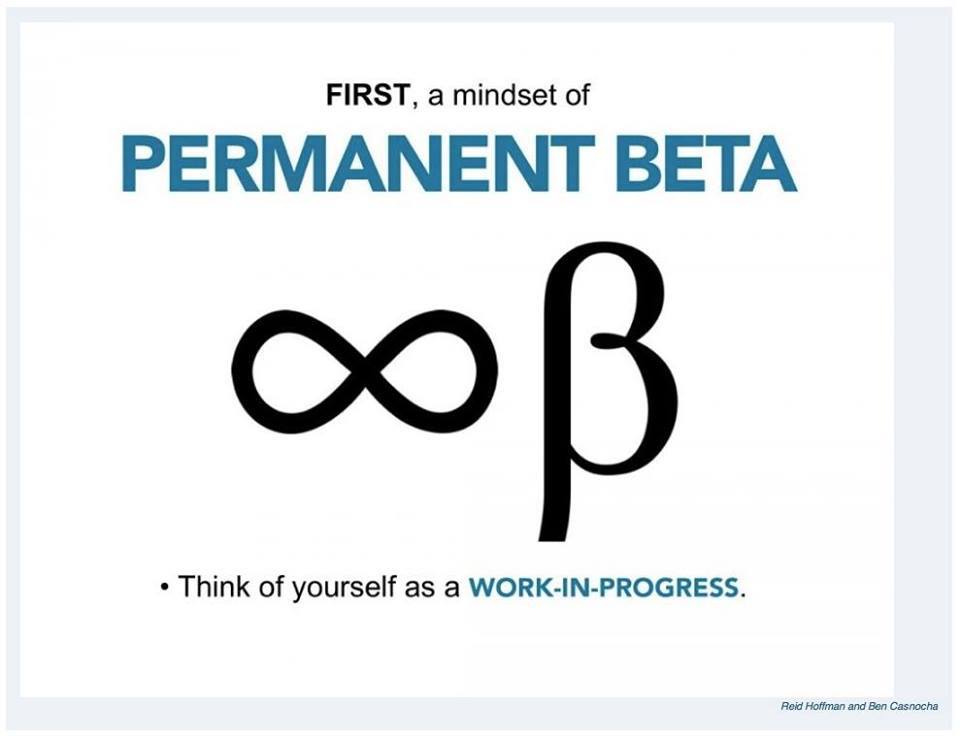
Products exist in permanent beta.
Startups chase infinite growth.
Skills require constant updating.
Careers no longer move in stages, but in loops.
The language of continuation has quietly replaced the language of completion.
Nothing is wrong with continuity in itself. The problem emerges when continuation becomes compulsory—and completion disappears as a cultural option.
the system behind the feeling
When nothing feels finished, the cause is rarely internal.
Digital platforms are designed to update endlessly.
Workflows prioritise iteration over resolution.
Organisations reward momentum, not closure.
Learning systems promise lifelong optimisation rather than mastery.
In these environments, stopping begins to feel irresponsible.
Rest feels undeserved.
Pauses feel like inefficiencies.
This is not accidental.
Systems built for speed, scale, and growth struggle with endings. Endings interrupt flows. They slow metrics. They resist optimisation.
So they are gradually designed out.
What replaces them is not chaos—but a carefully maintained state of perpetual incompleteness.
unfinishedness as a cultural mechanic
A system that never finishes keeps people inside it.
When nothing resolves:
attention stays engaged
effort remains extractable
responsibility shifts onto the individual.
If you feel behind, the system appears neutral.
If you feel unfinished, the problem appears personal.
This is one of the most effective cultural mechanics of our time: unfinishedness as motivation.
It produces productivity without satisfaction, activity without arrival, participation without closure.
And because it feels normal—because it is everywhere—it often goes unquestioned.
from “always improving” to “never arriving”
Self-improvement culture reinforces this logic seamlessly.
There is always another habit to optimise.
Another skill to acquire.
Another version of yourself to become.
Growth is framed as virtuous—completion, subtly, as stagnation.
But growth without arrival is not development—it is maintenance.
The cultural promise shifts from “you will get there” to “you must keep going.”
brands, products, and the aesthetics of unfinishedness
This logic is visible across contemporary products and brand environments.
Interfaces that never entirely settle.
Features that are always “coming soon.”
Experiences are designed to remain open-ended.
This is often framed as flexibility, responsiveness, or user-centricity—and sometimes it is.
But it also trains users into a specific relationship with systems: one where resolution is perpetually deferred.
The result is a subtle emotional state: engaged, but not satisfied. Active, but not complete.
a rare counter-example:
hinge and the courage to end
Most platforms are designed to keep users inside the system for as long as possible. Success is measured through retention, engagement, and time spent.
Hinge offers a rare inversion of this logic.
Its slogan—“the dating app designed to be deleted”—positions completion, not continuation, as the intended outcome. The value proposition is not endless browsing, perpetual matching, or infinite optimisation of desire. It is a resolution.
Semiotically, this is a radical move.
Hinge frames itself not as a destination, but as a transitional system—a structured passage from one state (seeking connection) to another (having found it). In doing so, it reintroduces a finish line into a category that thrives on endlessness.
What makes this positioning powerful is not its novelty, but its restraint. The brand acknowledges something most platforms avoid admitting: that prolonged engagement is not always aligned with user wellbeing or meaning.
Deletion becomes a success metric.
In a cultural environment dominated by permanent beta, Hinge demonstrates how designing for an ending can foster trust, clarity, and differentiation. It treats completion not as churn, but as fulfilment.
And in a world where nothing feels finished anymore, that promise alone carries symbolic weight.
how this connects to closure
If you read the previous edition on closure, you may notice that these ideas are not separate.
The closure piece explored how calendars promise endings—while systems quietly refuse them. This piece extends that logic further, showing how incompletion is not a failure of design, but often a feature of it.
Together, these pieces begin to reveal a larger pattern:
This is how the work behind the world builds—each edition adding another layer to the same underlying structure.
Not isolated essays, but a growing map of cultural mechanics.
what we lose when nothing finishes
Completion does more than mark an ending. It gives effort shape.
Without finish lines:
work loses weight
rest loses legitimacy
achievement loses meaning
Life becomes a sequence of transitions without destinations.
This is why so many people feel busy but unsettled, productive but unfulfilled. The system keeps moving—but meaning requires moments where movement stops.
noticing the pattern is the first interruption
Once you see this dynamic, it becomes difficult to unsee.
You start noticing how often:
systems resist closure
processes avoid endings
language replaces “done” with “ongoing”
This awareness doesn’t solve the problem—but it interrupts its invisibility.
And interruption is where agency begins.
where this work continues
Most conversations stop at naming the feeling: everything feels endless.
This is where this publication differs.
The work here follows patterns across time, systems, and domains—showing how these mechanics repeat, evolve, and reinforce one another.
Some of the most critical insights don’t live in single essays. They emerge through accumulation.
continuing the work
Paid subscribers receive two in-depth pieces each month that extend these patterns further—across platforms, organisations, brands, and everyday systems.
They also gain access to:
the archive of work that builds on earlier editions
comments and chat, where conversations continue
a growing community engaging with these ideas together
If this way of seeing resonates, a New Year offer for paid subscriptions is currently available, alongside options to start with a free trial, refer friends, or gift a subscription.
Nothing feels finished anymore—but understanding why is a way of beginning.